It took 17 years of grants, plans and volunteer hours to bring the hillside back. Here's how it happened, and what came before.
Before 1996
A hillside with a long history
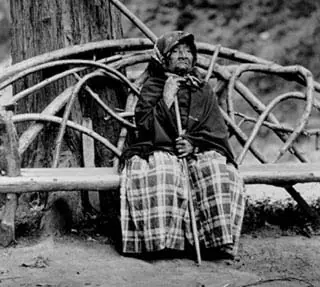
Kikisoblu (Princess Angeline), daughter of Chief Seattle
The Lake People
For thousands of years, the people who lived along Lake Washington, the Hahchuahbsh or "Lake People," traveled through this hillside between the lake and Puget Sound. They burned parts of the forest every few years to encourage blueberries and deer. After the 1856 fighting at Leschi and the hanging of Chief Leschi in 1858, Native people were pushed out of the area.
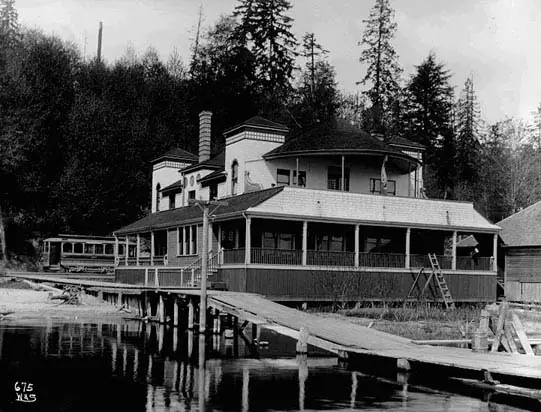
The trolley-era hotel at the foot of the hill
A trolley park (1891–1910s)
The hillside was clear-cut. Then in 1891, J. D. Lowman's land company built Madrona Lakeside Park and an electric trolley line through the canyon where Madrona Drive runs today. It had a dance pavilion, bath houses, rustic benches, trails through the woods and, by 1892, a hotel and wharf. For years it was a popular summer picnic spot. The city took over around 1908, and the hotel came down a few years later.
Left alone for 65 years
Decades of neglect
The WPA did some trail work in the 1930s, but after that the woods were mostly left alone. Generations of neighborhood kids explored them. Meanwhile English ivy, holly, laurel and blackberry spread from nearby gardens. They smothered the understory and kept young conifers from taking root under the aging big-leaf maples.
A few Madrona residents start removing the ivy climbing the trees. They soon see they need a plan. A city "Small and Simple" grant pays for four naturalist-led walks and planning sessions with Portico landscape architects. Four priorities come out of it: restore the native forest, fix the trails, uncover the streams, and use the Woods to teach. Friends of Madrona Woods "adopts" the Woods with Seattle Parks.
1998–99
A plan, and a classroom in the woods
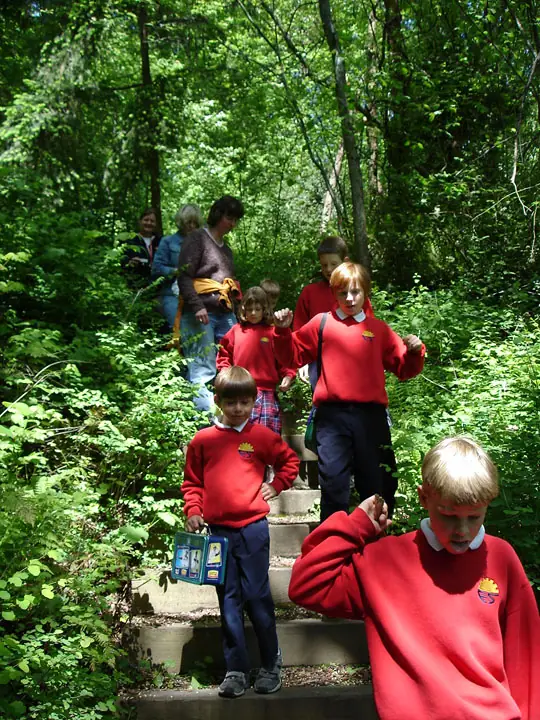
With support from the Starflower Foundation (started by Friends co-founder Ann Lennartz), the group hires landscape architect Peggy Gaynor. She sets up experimental planting plots and leads the Restoration Master Action Plan, which Seattle Parks approves in May 1999. Sixth graders from St. Therese and fifth graders from Epiphany School begin coming every other week. Each team tests soil, pulls invasives, orders native plants, and plants its own plot.
Students on the new steps
2000
Building the trails
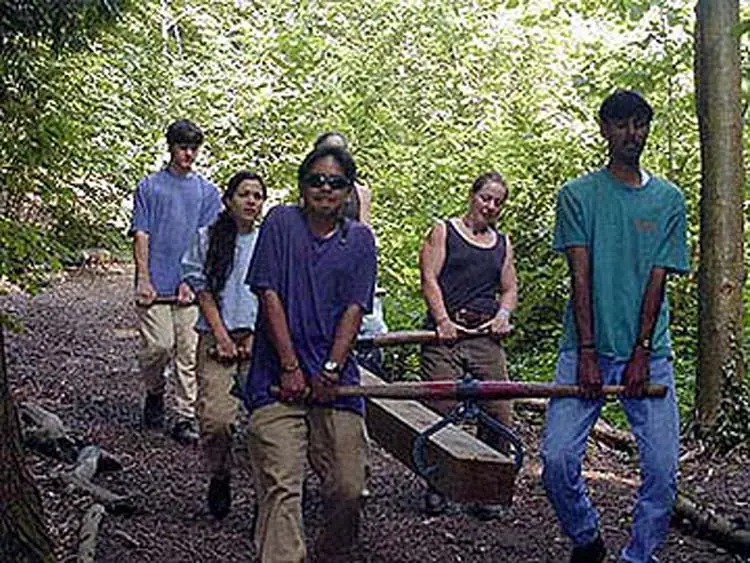
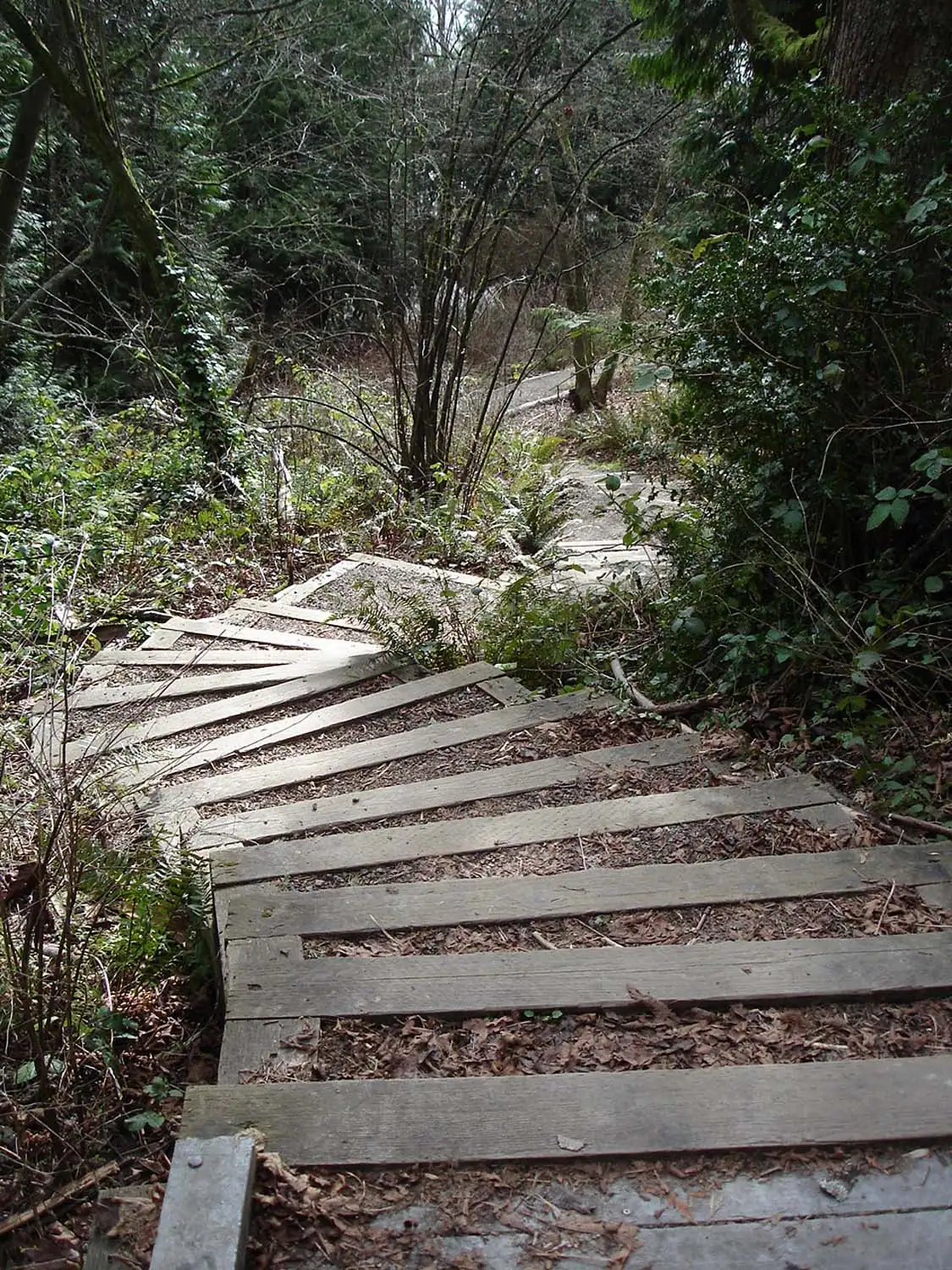
A Department of Neighborhoods matching grant funds major trail work, matched by nearly 2,500 volunteer hours. EarthCorps crews build the new main trail down to Lake Washington Boulevard, with 86 log and stone steps, two landings and a bridge. Eroding sections are moved away from the edge, and the old routes are replanted. Volunteers for Outdoor Washington help neighbors build a new 150-foot trail around Devil's Ditch. A $30,000 Parks grant stabilizes an eroding wet slope with a boulder water cascade.
EarthCorps carrying timbersThe Stairway to Heaven
2003–06
Planning to bring back a creek
Springs above 38th Avenue had been piped into storm drains for decades. The Friends raise money step by step: a $6,300 survey grant, $16,000 from Starflower for the design, and $60,000 from King County Water Works. They also go through years of permits and reviews. In 2006 the group joins the city's new Green Seattle Partnership, which brings in plants, monitoring and support. Students from Madrona K-8, Seattle Girls School and others keep working in the Woods.
2007–09
Daylighting Madrona Park Creek
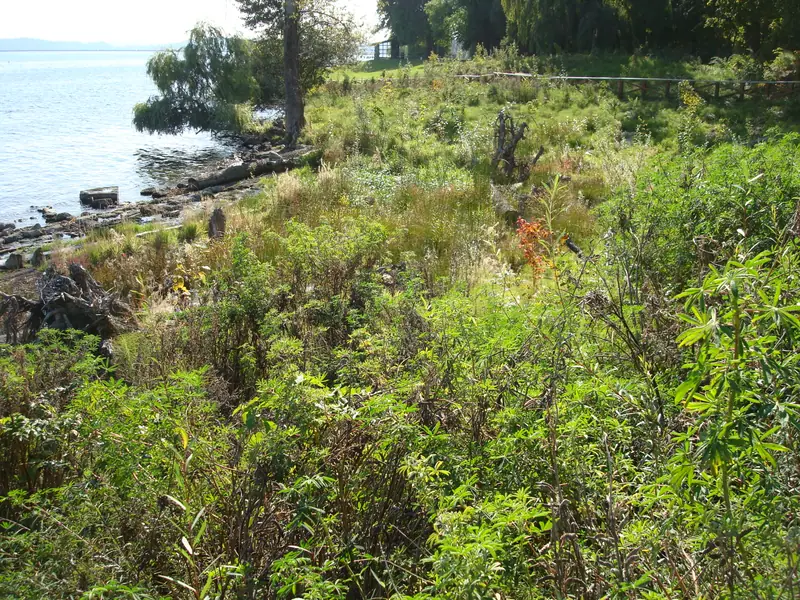
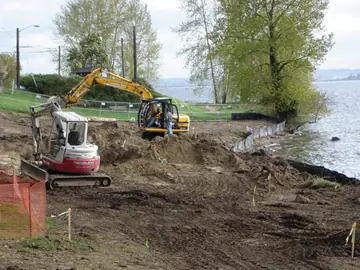
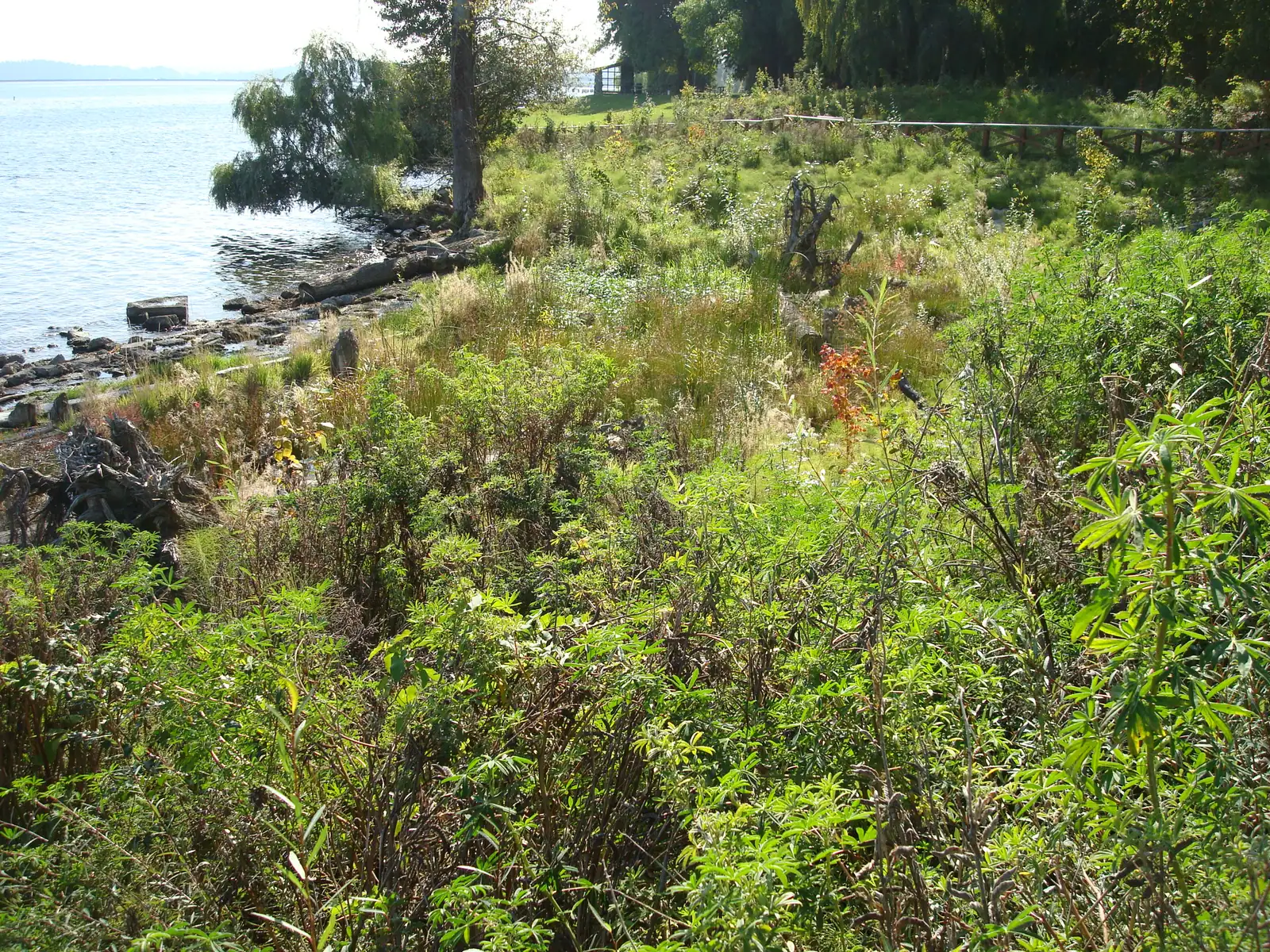
Heavy equipment arrives in spring 2007 to dig a new cove at the lakeshore. On October 24, 2008, the creek is released into the ravine and reaches Lake Washington a few days later. The last bridge goes in in January 2009, and volunteers plant thousands of native plants that March. The creek now runs about a quarter mile from its springs, through the ravine, ponds and fish-passable culverts, to a new wetland cove. It was the first time in Seattle that a complete creek was reconnected to Lake Washington, and young salmon can rest and feed there on their way to the Sound.
The project was paid for by city, King County and federal grants (NOAA, FishAmerica, the King Conservation District and more), nearly $40,000 from neighbors, and many hours of donated legal and environmental advice. In 2009 Peggy Gaynor's work on Madrona Woods won an honor award from the Washington chapter of the American Society of Landscape Architects.
The lakeshore lawn, beforeDigging the cove, April 2007The cove, after
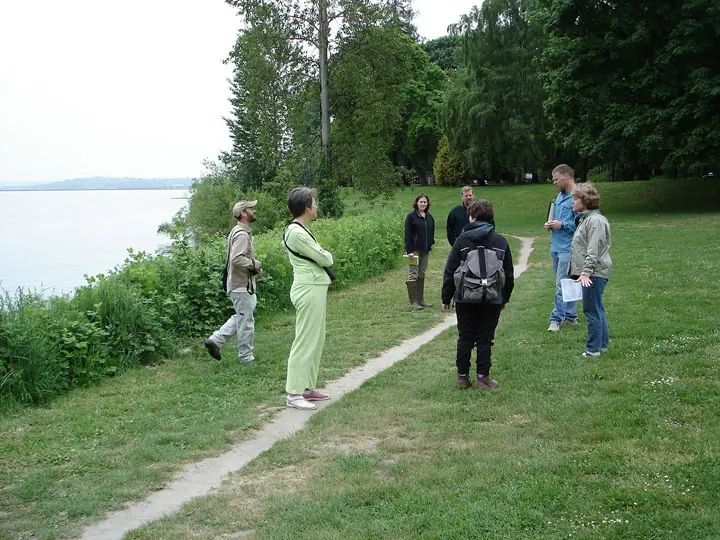
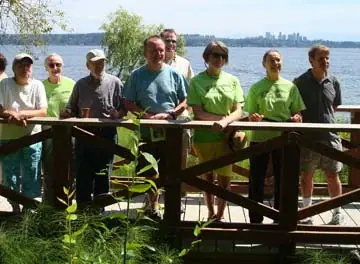
Neighbors celebrate the finished creek with Parks Superintendent Tim Gallagher in July 2009. A University of Washington restoration capstone team clears and replants the steep bank above Lake Washington Boulevard. Students from Garfield and Nathan Hale high schools replant the sidewalk edge along Spring Street. A bequest from neighbor Mimi Kraus, through the Madrona Community Council, pays off the daylighting debts.
The board with Superintendent Gallagher, 2009
2012–13
The last 1.5 acres
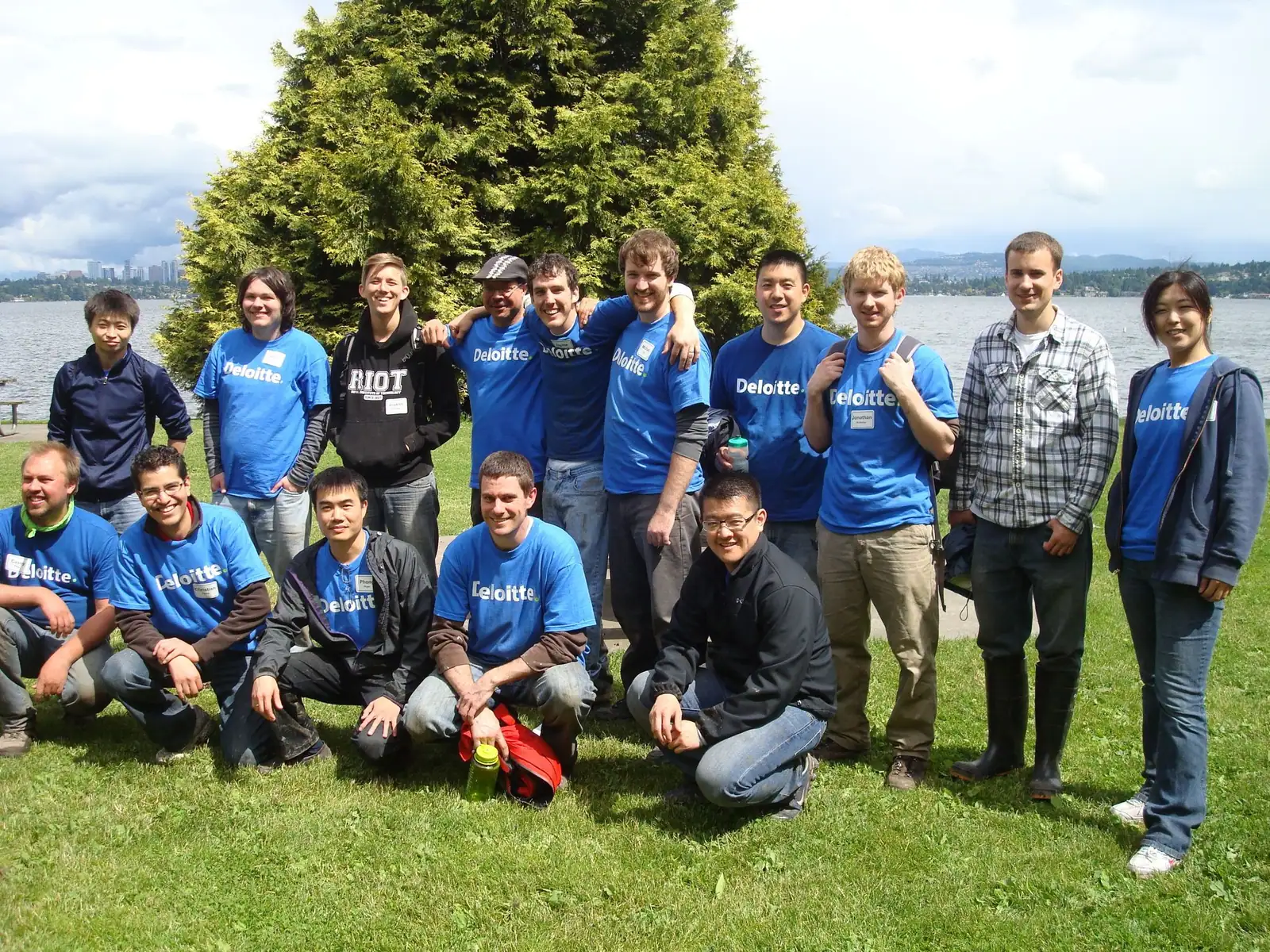
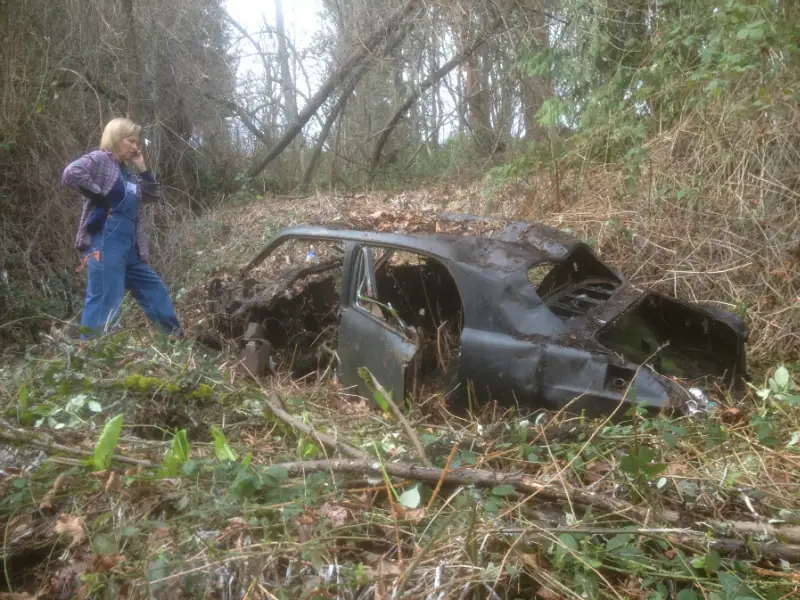
Grants from King County's Wild Places in City Spaces program, the Department of Neighborhoods and the Washington Native Plant Society fund the final unrestored corner, at the southeast edge of the Woods. The Friends of the Cedar River Watershed bring in volunteers, and so do groups from Deloitte, Seattle Works and a UW climate conference. Clearing the blackberries uncovers a 1940s Ford buried in the brambles. Volunteers plant more than 3,000 trees and shrubs, and with that the first phase of the restoration is complete.
Deloitte volunteers, June 2012The car, uncovered
2013–20
Maintenance mode, and signs of a returning forest
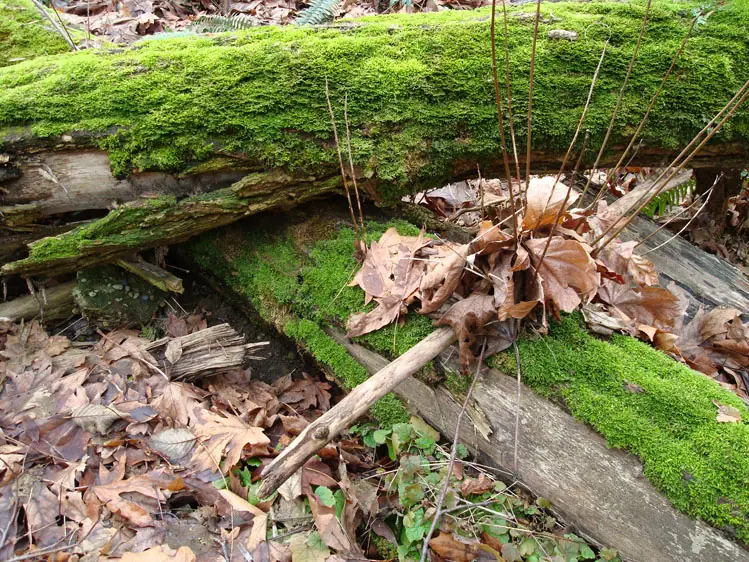
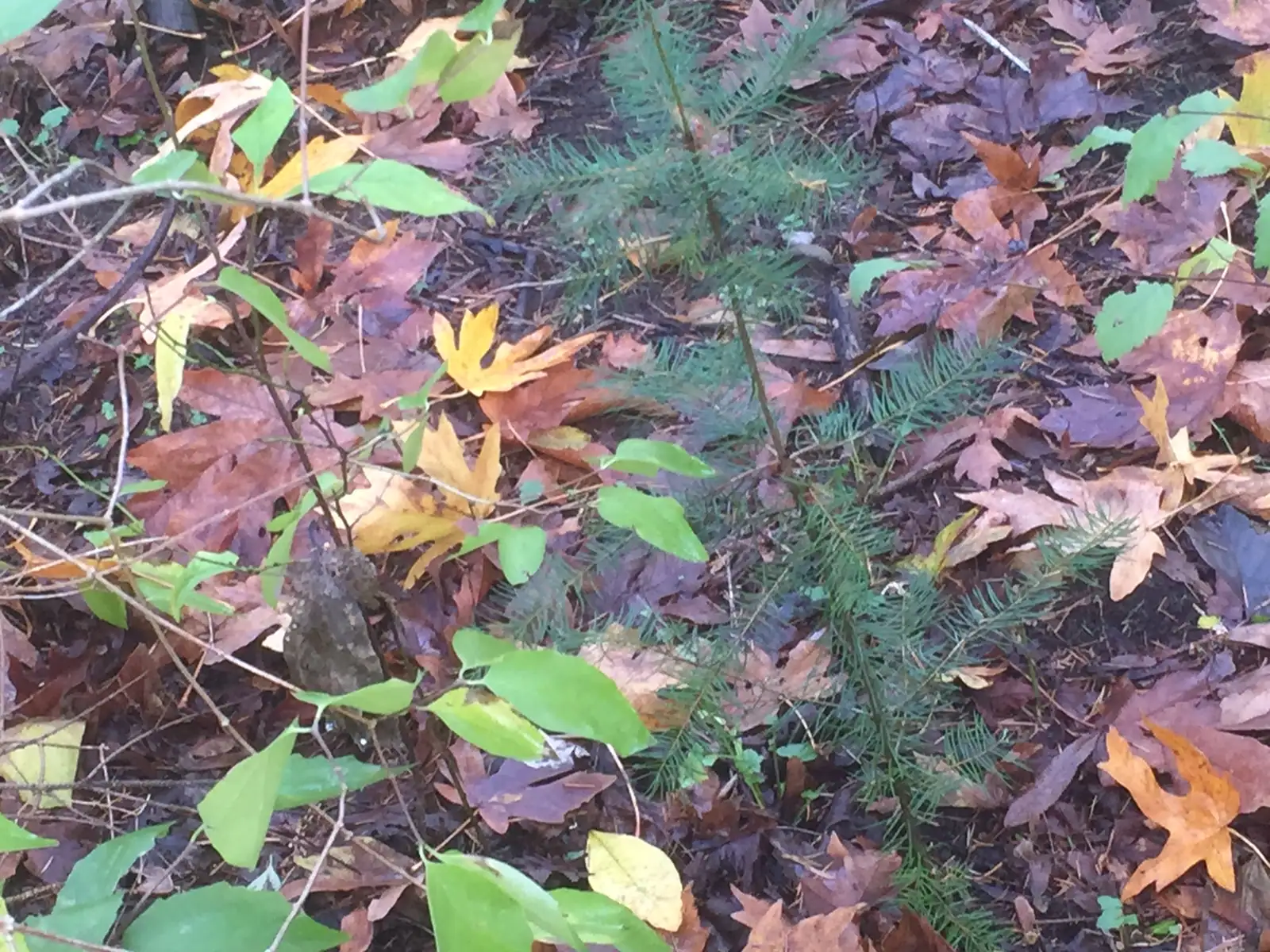
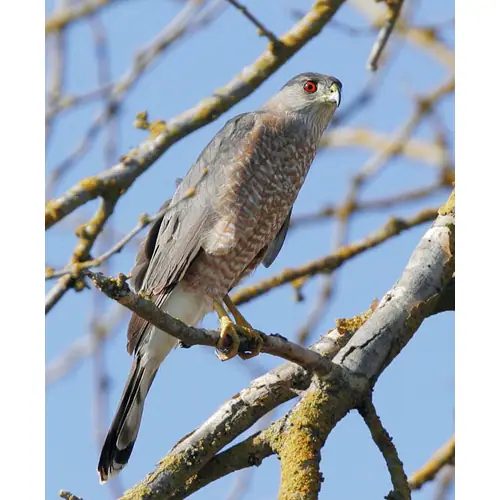
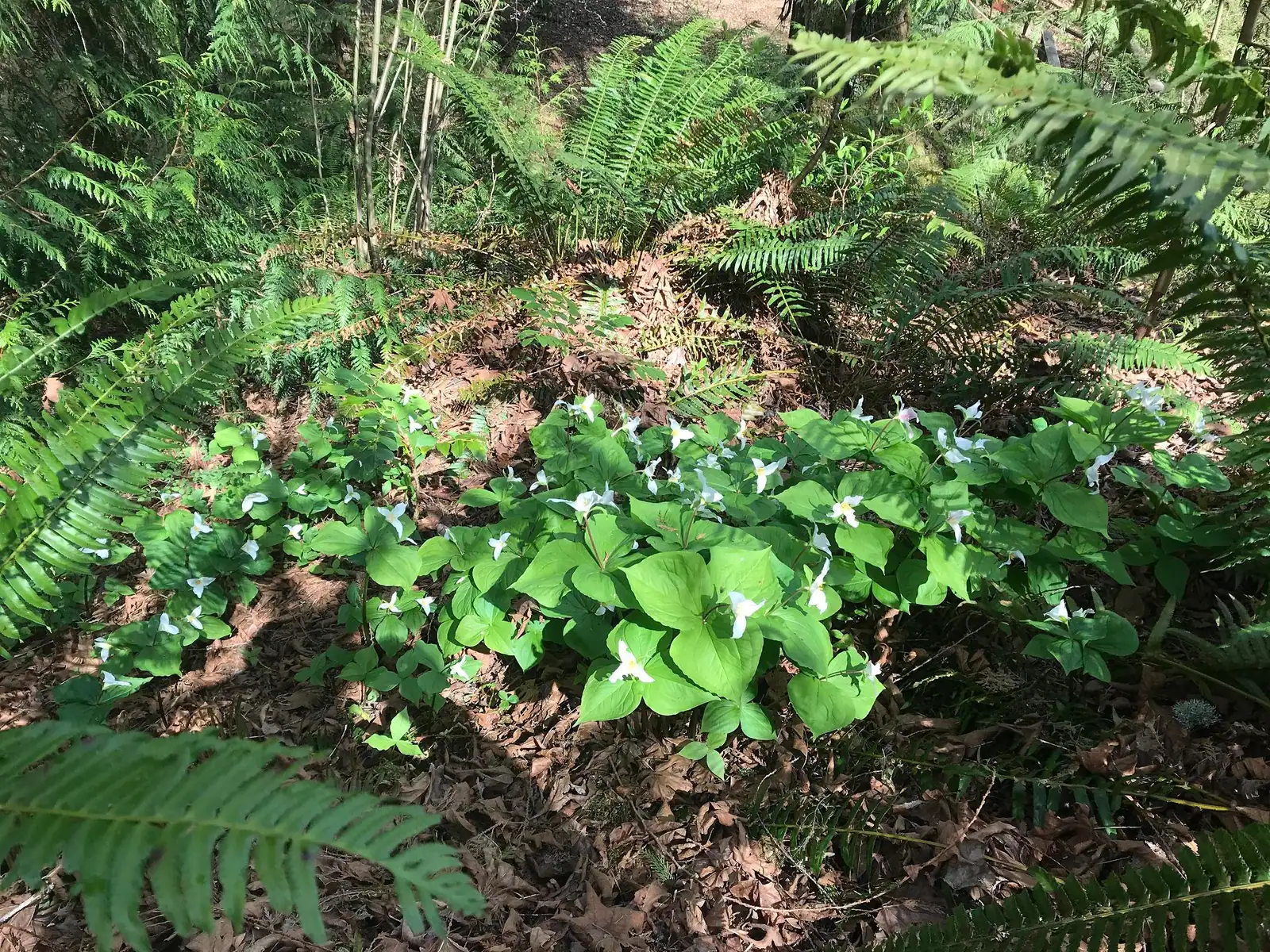
With the big projects done, the work turns to upkeep: weeding, mulching, replanting thin spots, repairing the creek where it slips underground, and clearing fallen trees from the trails. Illegal trail-cutting becomes a long-running problem, and Seattle Parks builds a protective fence at the Grand & Spring entrance in 2014. There are signs the forest is healing on its own. Douglas-fir seedlings sprout where ivy was cleared, Cooper's hawks nest in the ravine, and trilliums spread on the slopes. In 2016, volunteers plant more than 100 conifers through Forterra's Evergreen Carbon Capture program.
A self-seeded Douglas-fir, 2015Cooper's hawks nest in the ravineTrillium freed from ivy, 2020
Today
Caring for what's been restored
A restored urban forest still needs people. Invasive plants keep blowing in, young conifers need light and room to grow, and the trails and creek need regular care. Work parties keep the Woods healthy, and new volunteers are always welcome.